A fabulous vegetarian meal everyone will love!
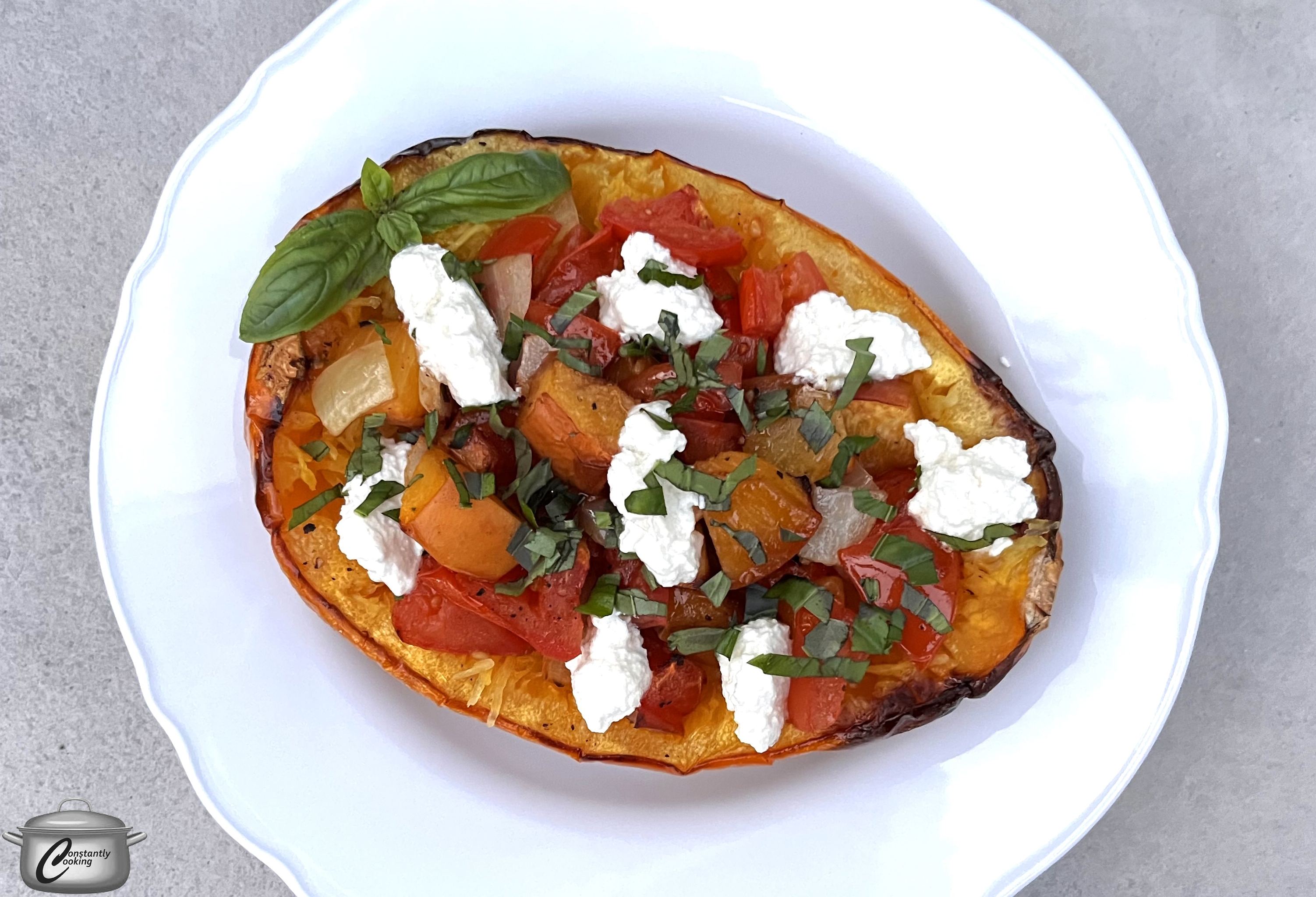
Spaghetti squash is one of those things that until you prepare and/or eat it for the first time, you might not realize how delicious and versatile it truly is. I used to simply roast them, then take the strands out and put a familiar pasta sauce on top. I have since found that cooking and filling them, then serving them “boat style” is a much more fun and attractive presentation. This fantastic roasted tomato and peach combination is a perfect match for the flavour of spaghetti squash, and if you want to take things to the next level, you can very quickly and easily make a batch of homemade fresh ricotta to scatter on top.
Ingredients
- 1 medium-sized spaghetti squash
- 3 tablespoons (45 mL) olive oil, divided
- Freshly ground salt and pepper
- 3 plum tomatoes, chopped in 3/4 inch (2 cm) pieces
- 2 ripe, unpeeled peaches, chopped in 3/4 inch (2 cm) pieces
- 1 medium onion, peeled and chopped in 3/4 inch (2 cm) pieces
- 1 tablespoon (15 mL) good-quality balsamic
- salt and pepper
- 4 teaspoons (19 g) butter (or additional olive oil)
- 3/4 cup (190 g) fresh ricotta
- 2 tablespoons (30 mL) chopped fresh basil
Method
- If you’ve never cooked a spaghetti squash before, I’ll outline that process first. Skip ahead to the next section (roasting tomatoes, peaches and onions) if this is not your first spaghetti squash rodeo.
- With a sharp knife, make several slits in the skin of the spaghetti squash, along the line where you will eventually cut the squash in half lengthwise. This will allow steam to escape when cooking; if you don’t do it, the squash may explode. Microwave for 4 to 5 minutes on high. Meanwhile, preheat oven to 400F.
- With oven mitts, remove the squash from the microwave. Remove the stem and cut in half lengthwise, along the slits you made. With a large spoon, remove and discard the seeds (or save them to roast as you would pumpkin seeds).
- Drizzle 1 tablespoon (15 mL) of the olive oil over the insides of the spaghetti squash and sprinkle with a little salt and pepper. Place cut side down on a parchment-lined baking tray and sheet lined with parchment paper or foil. Bake in preheated oven 30 – 45 minutes until squash feels tender right through when pierced with the tip of a sharp knife (cooking time will vary depending upon size of squash). NOTE: You can skip the oven step and cook completely in the microwave if you prefer, but I find the flavour is much better with the oven-roasting step included.
- While squash is roasting, place chopped tomatoes, peaches and onions on a second parchment-lined baking tray. Drizzle with remaining olive oil and balsamic, then add a few pinches each of salt and freshly ground pepper. Toss with your hands to combine then spread out in a single layer and place the tray in the oven, on a rack below the squash. Roast for about 20 minutes, or until tender. Stir the mixture once or twice while roasting; when tomatoes and peaches are tender, remove pan from oven and set aside.
- When squash is tender, remove from oven and place, cut sides up, on a plate or cutting board. Use a fork to loosen the strands of ‘spaghetti’. Dot the insides with the butter or a bit more olive oil and fluff with the fork.
- Divide the roasted vegetables and any accumulated pan juices over the spaghetti squash (I like to serve the ‘noodles’ inside the roasted squash ‘boats’ (skins) but if you prefer, you can plate them) and scatter ricotta and basil over top. Serve warm.
Serves 2; recipe can easily be multiplied.

 Constantly Cooking with Paula Roy
Great recipe! Very unique. And I love the fresh ricotta on top. It’s definitely not what you get at the store.
Thank you!